The Grooveblaster — Cities, Streets & Bebop Nights
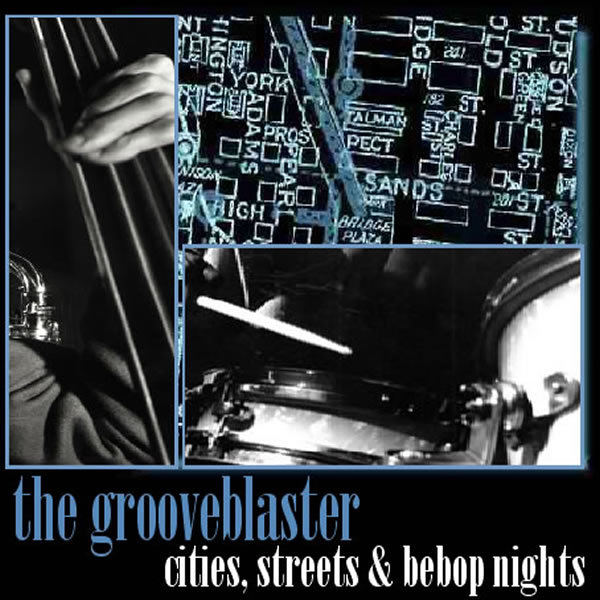
There is a particular kind of musical sleight-of-hand at work on The Grooveblaster’s 2008 Cities, Streets & Bebop Nights. On the surface, it is a collection of downtempo, sample-driven pop and downtempo chill lounge-inflected instrumentals. Dig a little deeper, though, and the album reveals itself as a carefully assembled collision of jazz vocabulary, retro soul, electronic production and cinematic atmosphere. Rather than attempting to reproduce bebop literally, The Grooveblaster seems more interested in its attitude: the nocturnal energy, the sense of movement, and the suggestion that something interesting might happen around the next corner.
The album’s 14 tracks move between instrumental pieces and vocal collaborations, and that contrast gives the record much of its character. The Grooveblaster’s production has a distinctly collage-like quality, but the arrangements rarely feel merely decorative. Tracks such as “B Is for Benedetta,” “Angie Dickinson,” “Take a Hard Ride,” and “Waiting for Snow in Havana” establish the record’s cinematic side, while “Groovin’ With a Little Sharp Chick (Last Night at Ronnie Scott’s)” makes the jazz-club reference particularly explicit.
The vocal tracks provide the album with its strongest sense of personality. Anji Bee is especially well matched to The Grooveblaster’s aesthetic. Appearing on “Whole Wide World,” “Summer Days,” and the Lovespirals remix “This Truth,” she brings a cool, intimate vocal presence that sits naturally inside the production rather than dominating it. “Whole Wide World,” in particular, has the wistful quality of a late-night recollection, with Bee’s lyric about searching for a lost first love giving an otherwise polished groove an emotional center.
Yasi Baby, associated with Pacha Massive, takes the record in a more overtly rhythmic direction. Her appearances on “All Night Serenade Me,” “Shame,” and “Silly Game” give the album three of its most distinctly vocal-driven moments. There is a sensual, cosmopolitan quality to these tracks, but The Grooveblaster wisely leaves enough space in the arrangements for the groove itself to remain part of the attraction.
Laura Harley makes a more concentrated impression on “Shine,” while Daca Kopanja is featured on “Sunrise in Daca’s Eyes.” Their appearances reinforce one of the album’s strengths: The Grooveblaster understands that different voices can function as different colors within the same sonic palette. The singers aren’t simply interchangeable features; each changes the atmosphere of the production around them.
That approach is central to the album’s success. The Grooveblaster has spent years working in sample-based dance, electronic and downtempo music, and Cities, Streets & Bebop Nights reflects that background without sounding confined by it. The record draws on jazz and lounge music, but it also has an ear for the rhythmic language of electronic music and the seductive polish of retro pop. Its references are broad—jazz, soul, cinematic music, club culture—but the resulting sound is recognizably its own.
If there is a defining quality here, it is atmosphere. Cities, Streets & Bebop Nights is closer to a musical travelogue assembled from fragments of clubs, city streets, old movies and after-hours radio. The instrumental tracks establish the scenery; the singers provide the characters.
The result is an album that has aged into an intriguing document of the late-2000s downtempo landscape—stylish without being overly polished, eclectic without losing its center, and sufficiently rooted in jazz to give its electronic textures some real historical perspective. Cities, Streets & Bebop Nights is ultimately less about recreating the past than about filtering it through a producer’s distinctly modern imagination.